
Campden Tunnel
The Project
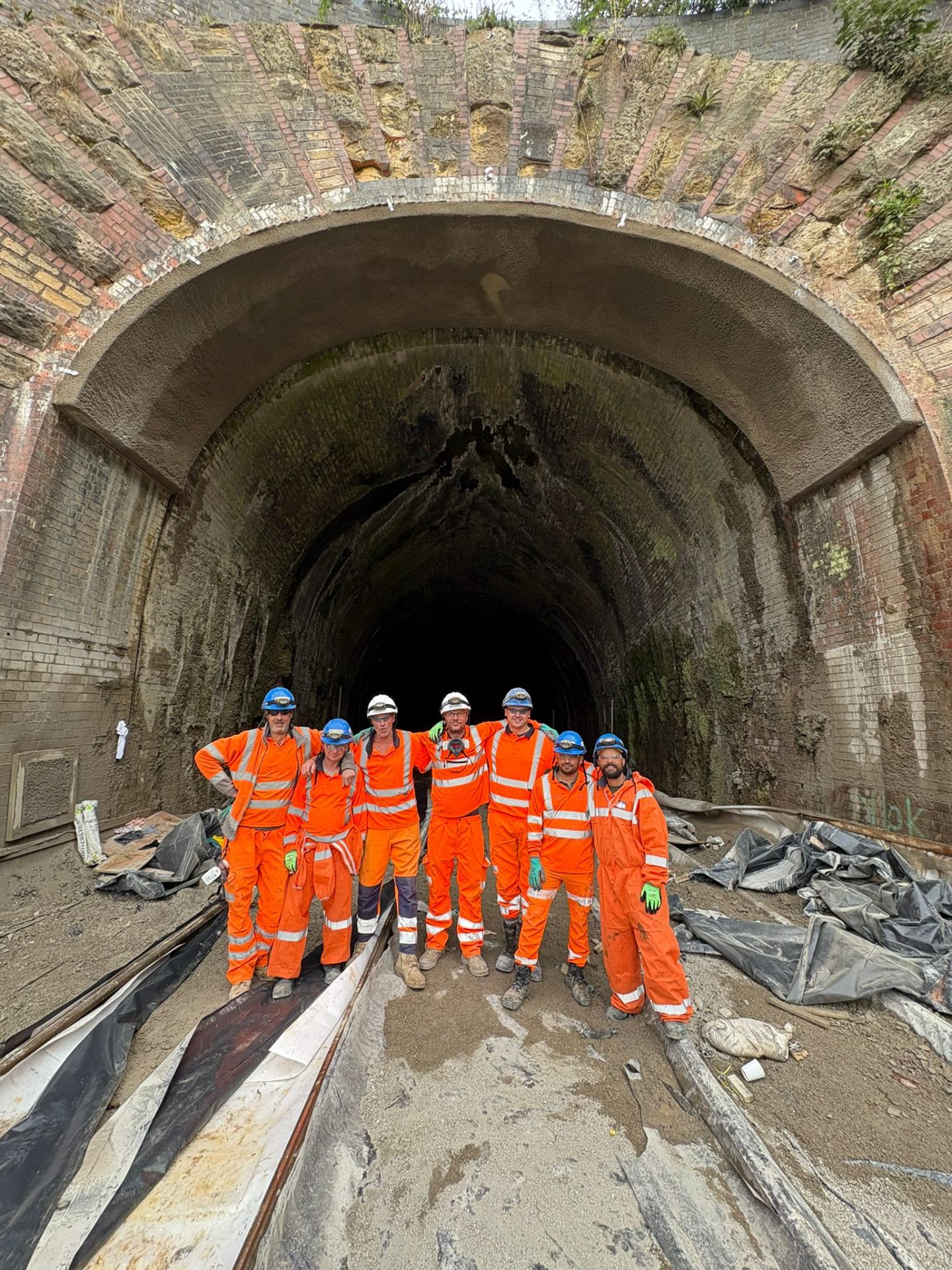
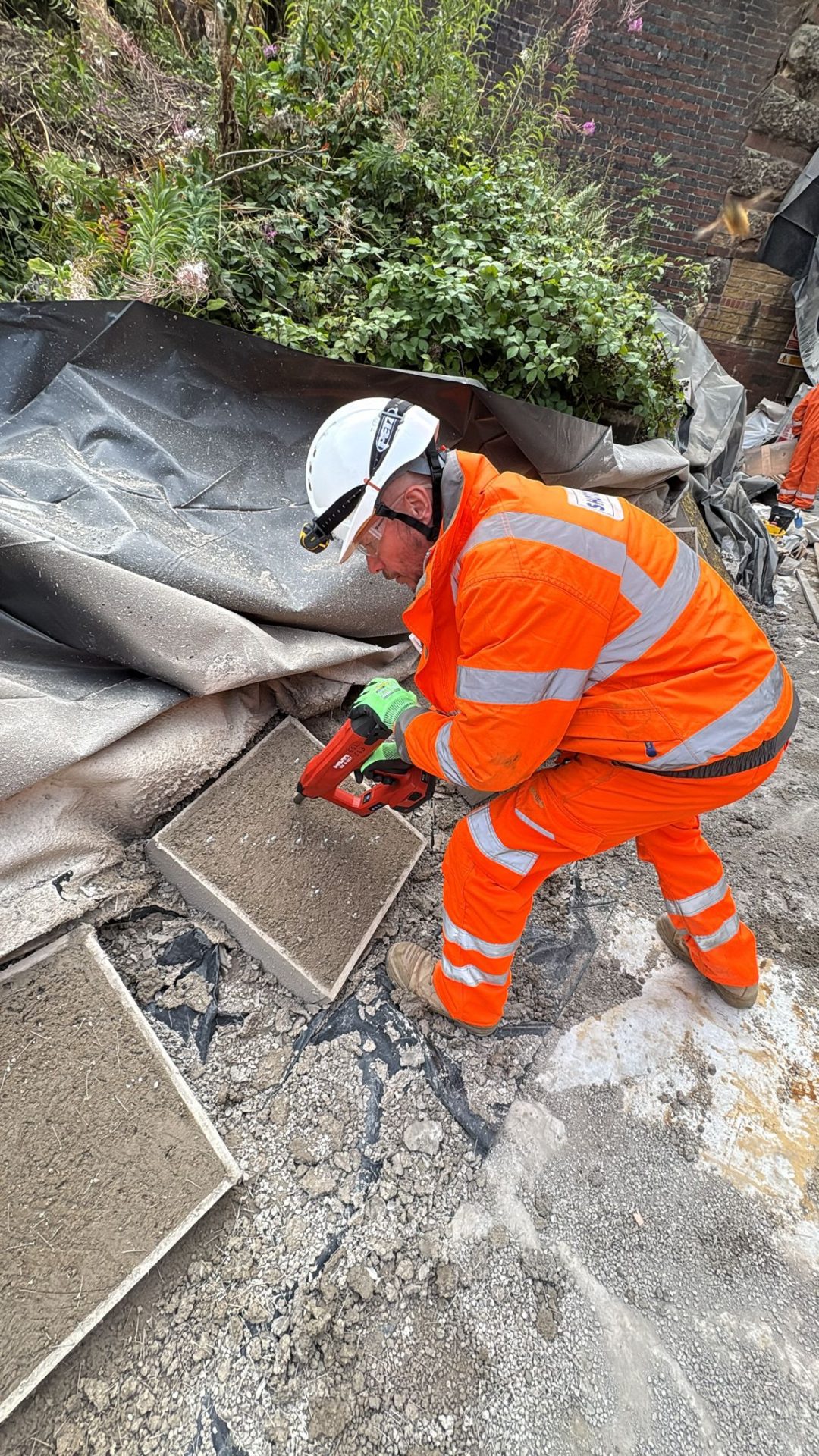
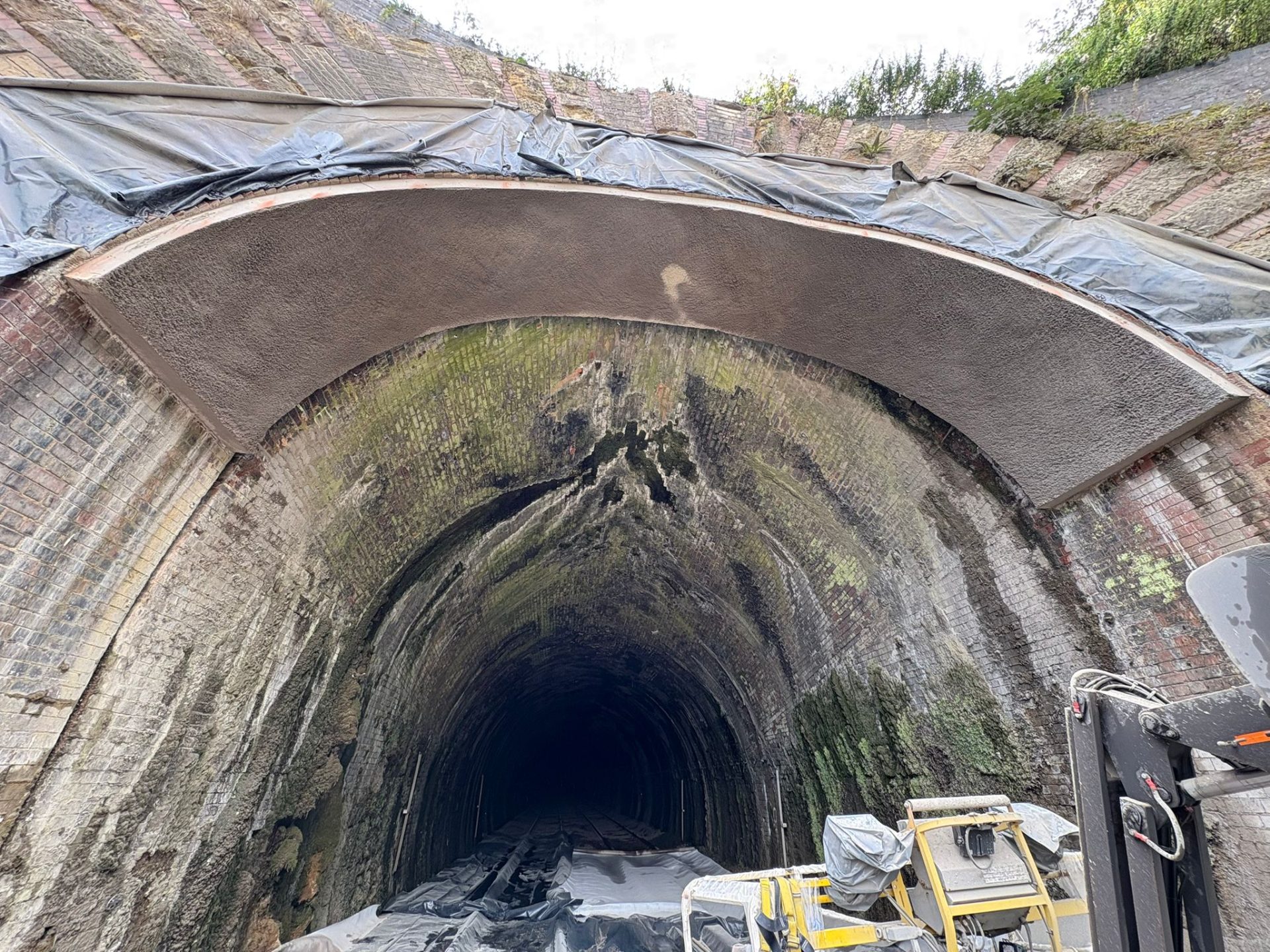
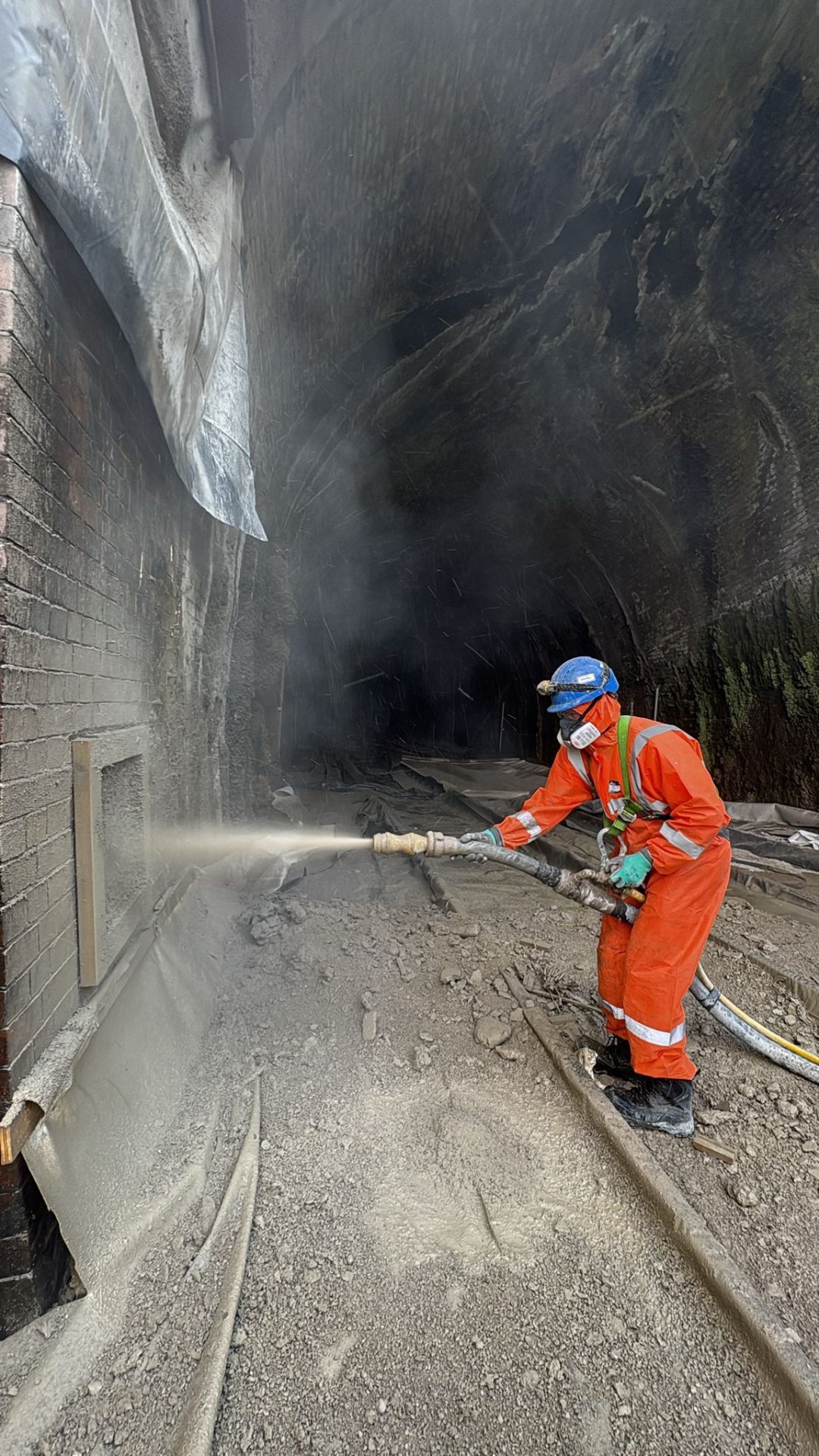
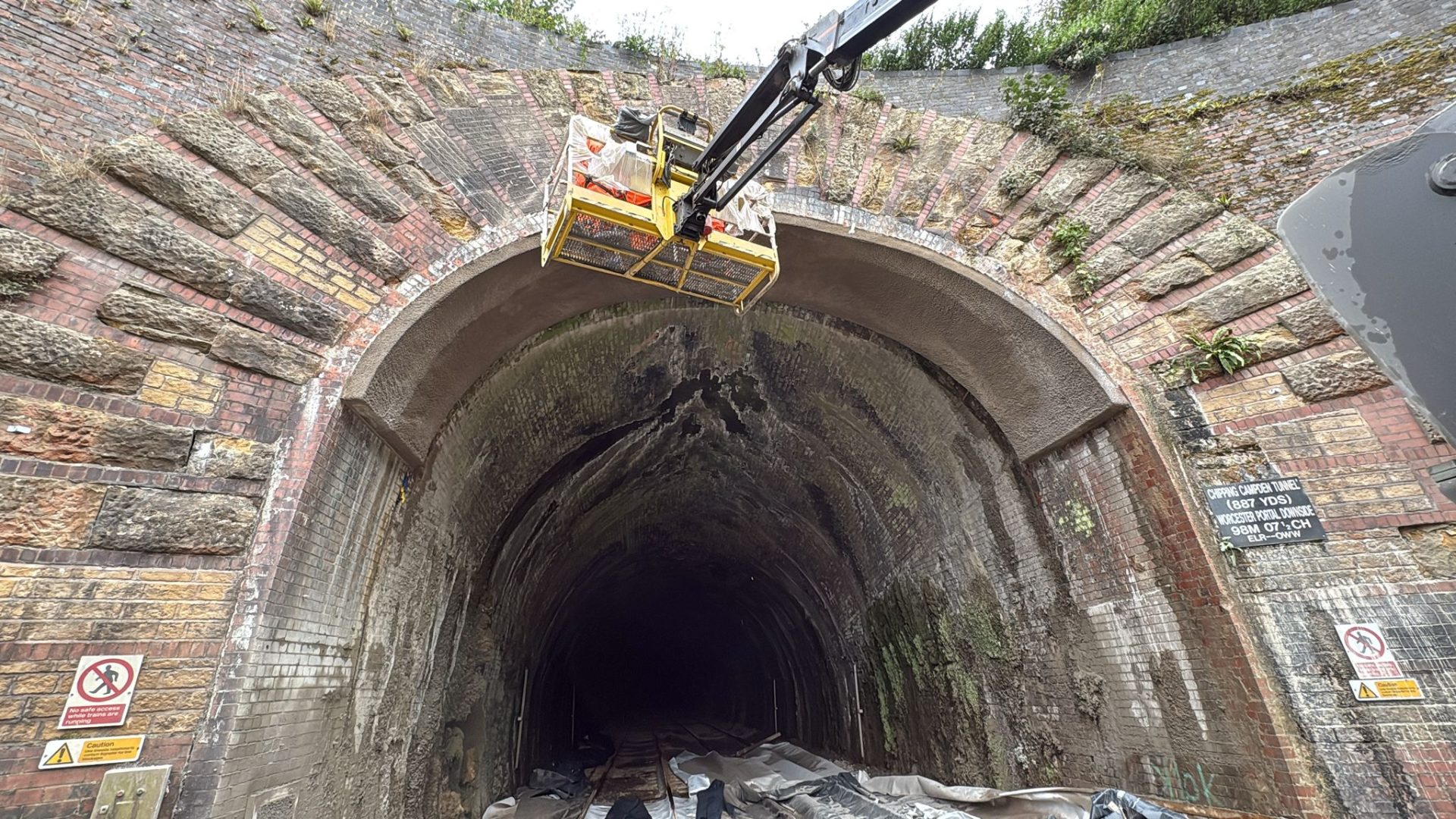
SSL was appointed by Morgan Sindall to deliver complex sprayed concrete lining (SCL) works at the portal of the historic Campden Tunnel. The structure, originally built in the 19th century, required targeted relining to improve long-term durability and structural integrity. The project involved 24-hour working to meet strict rail possession requirements and ensure minimal disruption to the operational line. The works included substrate cleaning, installation of overhead soil nails and dowels, construction of shutters and stop-ends, and the application of steel fibre–reinforced dry spray concrete. A regulating layer was also applied, followed by comprehensive EAS, beam and bond testing.
The Solution
Overhead Multi-Directional Drilling in Unknown Substrate
The installation of 11 overhead soil nails into the tunnel crown presented a significant engineering challenge due to the unknown material behind the historic brickwork. SSL carried out detailed tool and resin trials to establish the most effective drilling heads and injection materials. MasterBuilders Masteroc RB 380 resin was selected for its rapid-curing properties and strong overhead performance. SSL also organised specialist training to ensure the correct use of this equipment, reducing operational risks and ensuring a smooth delivery.
Restricted Track Access and Complex Logistics
Access to the site was only possible through a railway crossing located approximately 1 km from the tunnel, and this crossing was restricted to scheduled road closures. This required exceptionally precise planning to ensure that all plant, materials and equipment arrived within tight time windows. To achieve this, SSL produced detailed loading plans and diagrams for each trailer, ensuring that nothing was forgotten and no unnecessary movements occurred.
Programme Pressures and Early-Age Strength Requirements
The project demanded rapid early-age concrete strength to permit timely track hand back. SSL selected Natcem 430F and Natcem 530, which offered excellent fast-setting characteristics suitable for possession-based works. Efficient, transport and spraying processes were implemented to ensure consistent curing, structural performance and overall quality. EAS testing was used to produce hand back QA documentation and evidence.
The Outcome
The project was completed on time, incident-free, and to an exceptionally high standard. The upgraded lining improved structural stability, increased durability and delivered a clean, well-finished appearance. The client praised SSL for its professionalism, technical expertise and seamless delivery. SSL's digital documentation platform enabled efficient reporting, allowing the client to review real-time progress updates and testing data throughout the project.